
According to the Canadian Anti-Fraud Centre (CAFC), 17,000 cases of fraud targeting seniors were reported in 2024, resulting in $137.9 million in losses. Thousands more incidents likely went unreported.
The most common types of fraud affecting older adults include identity theft, financial fraud, grandparent scams, and tech support scams. Seniors are often prime targets for scammers because of several reasons.
• Trusting Nature – Many are polite and willing to help, making them easier to manipulate.
• Less Familiar with Technology – Limited experience with smartphones, computers, and online security increases vulnerability.
• Financial Stability – Many seniors have pensions, savings, or assets that scammers seek.
• Isolation and loneliness – Seniors living alone may be more susceptible to phone, email, or online contact from strangers. A friendly email or voice on the phone may or could go a long way to gain trust quickly.
• Reluctance to Report – Fear, embarrassment, or confusion often prevents them from reporting scams, allowing fraudsters to continue.
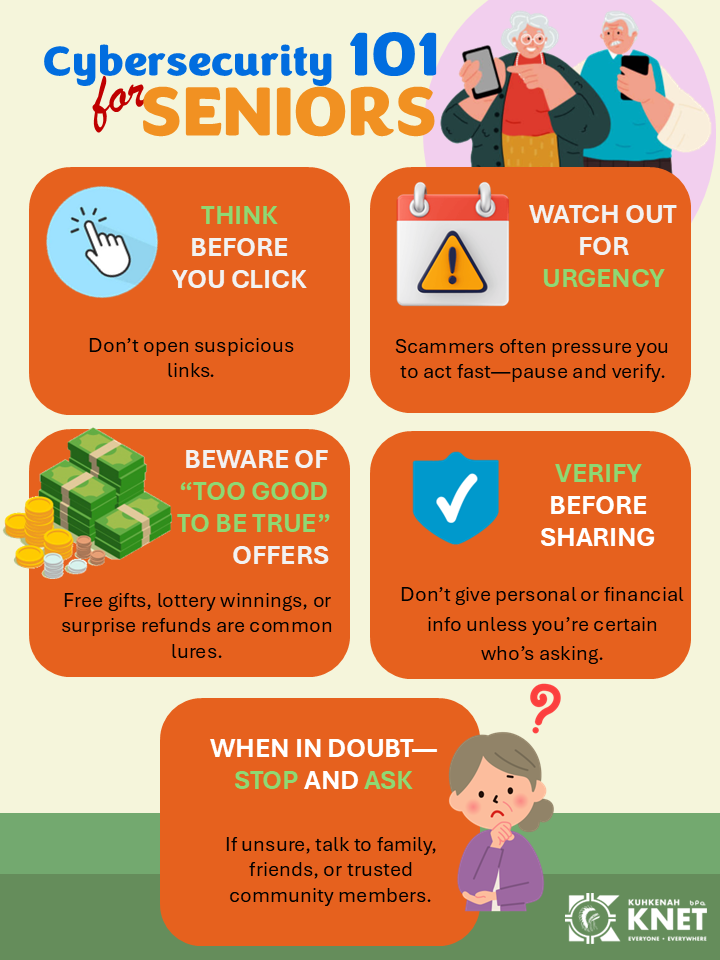
The infographic below outlines easy-to-follow cybersecurity tips to help seniors prevent scams and protect themselves online.
References:
- Plan to Protect. (Aug 2025). Scams and Fraud Targeting Canadian Seniors: A Call to Vigilance. https://www.plantoprotect.com/about-us/news/blog/scams-and-fraud-targeting-canadian-seniors-a-call-to-vigilance-1/
- Canadian Association of Retired Persons. (2025). Frauds and Scams: Carp Demands Justice for Seniors. https://prod-static.carp.ca/uploads/2025/06/CARP-Policy-Brief-Frauds-and-Scams.pdf
- Elder Abuse Prevention Ontario. (n.d). 5 Cyber Scams Targeting Seniors. https://eapon.ca/5-cyber-scams-targeting-seniors/